
Price · 5 min read
Electric wheelchair price: what a power chair costs in 2026
From $1,699 to $3,999: what each type costs, why one chair has three prices and what a return really costs.
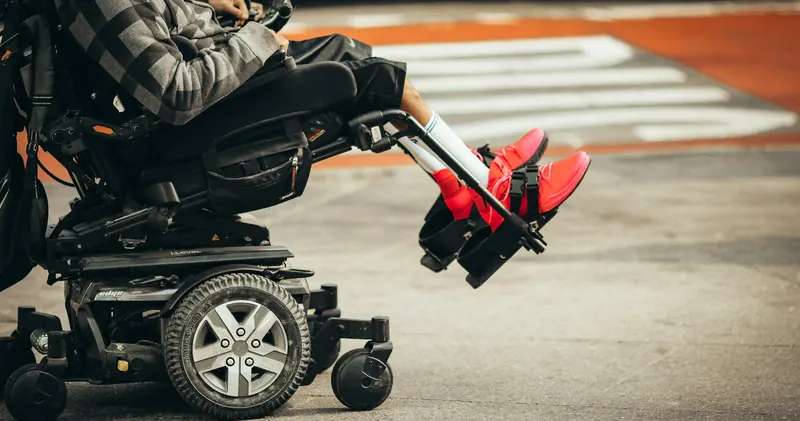
Read the guide › Photo: Cameron Cox / Unsplash
Yes, you can usually fly with an electric wheelchair, but no agency stamps a chair "TSA approved". Three bodies are involved: the FAA limits a lithium battery that must be removed from the chair to 300 Wh, TSA screens the chair at the checkpoint, and the airline decides how it travels. Tell the airline at least 48 hours ahead. Official pages read on November 13, 2026.
No. People search for it, and sellers print it, but TSA does not approve wheelchairs. Its job is screening. Its page says officers "will screen wheelchairs and scooters to include the seat cushions and any non-removable pouches", that items "will be tested for traces of explosives", and that you may ask to be screened while seated in your chair (tsa.gov).
The rules about what may fly come from the FAA, which treats wheelchair batteries as dangerous goods with special allowances. The rules about how you are treated come from the Department of Transportation. And the yes or no for your flight comes from the airline. A product page can be honest and still not bind any of the three.
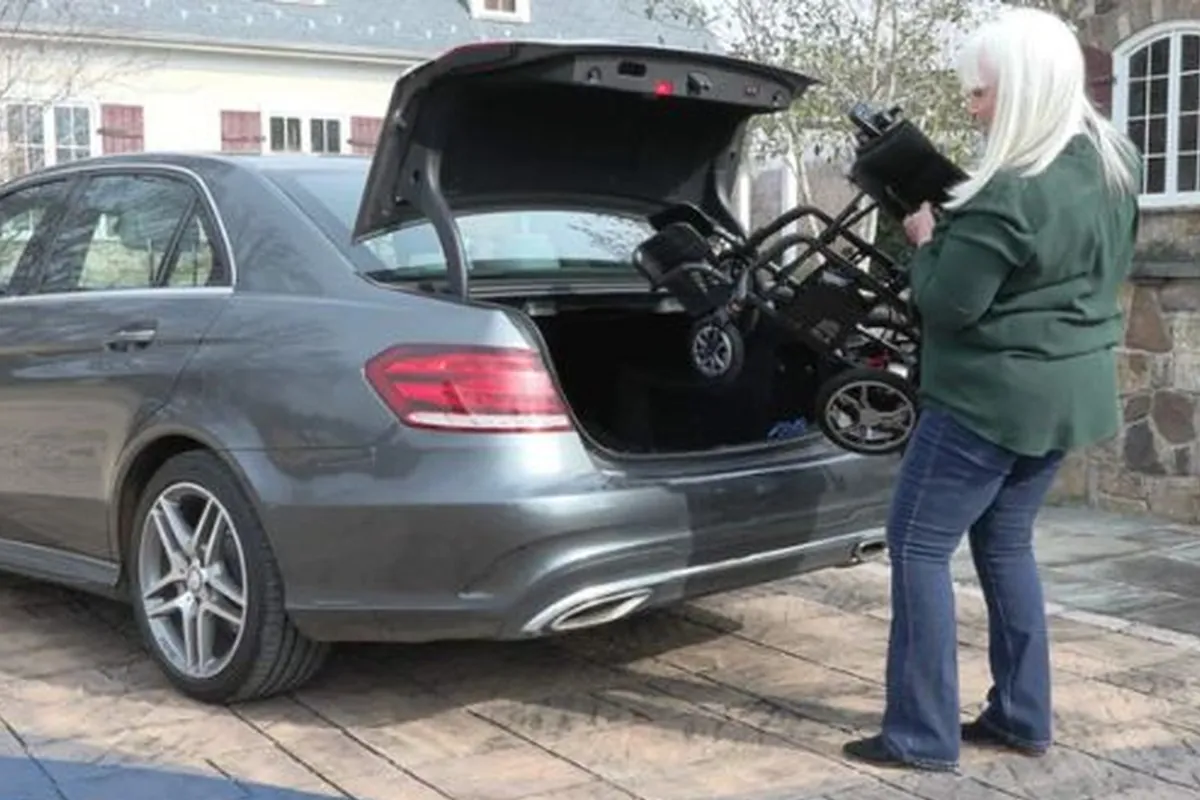
The FAA's PackSafe page sorts mobility devices by battery (faa.gov). For a folding travel chair, two cases matter.
Sealed lead-acid batteries, which the FAA calls non-spillable, may remain installed if they are securely attached and their terminals protected. In every case the page ends the same way: contact your airline, because "individual airlines may have more restrictive rules".
Among the folding chairs we compare, these standard batteries are under the limit, by the figures of the brand or the seller:
| Chair | Standard battery | Weight to lift |
|---|---|---|
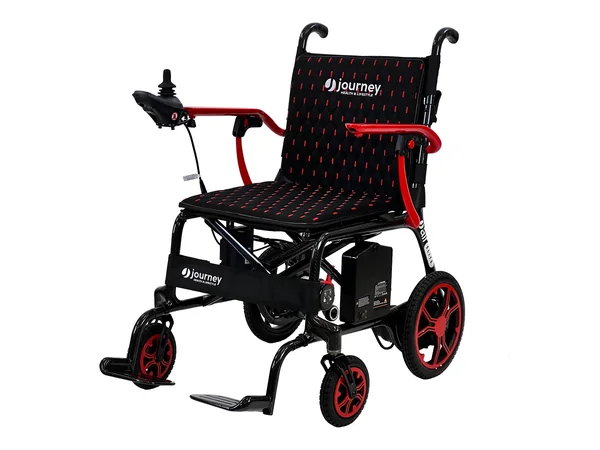
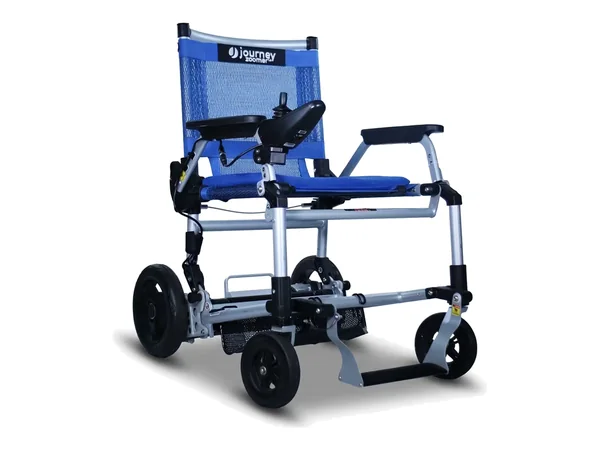
| Journey Zoomer | About 209 Wh (24 V 8.7 Ah) | 35.7 lb |
| Journey Air Elite | 240 Wh | 26 lb |
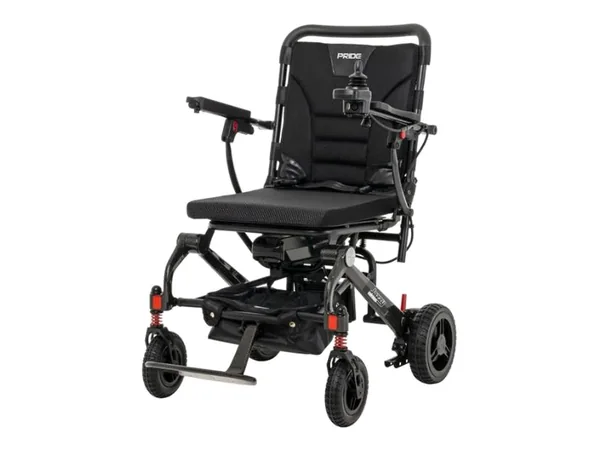
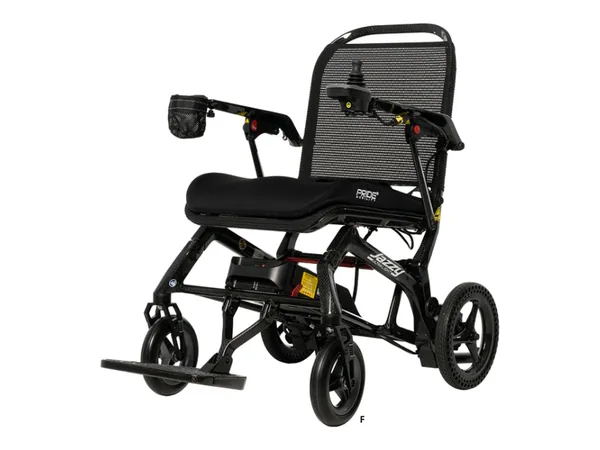
| Pride Jazzy Ultra Light | 252 Wh (10 Ah pack) | 33 lb |
| Pride Jazzy Carbon | 288 Wh | 39 lb |
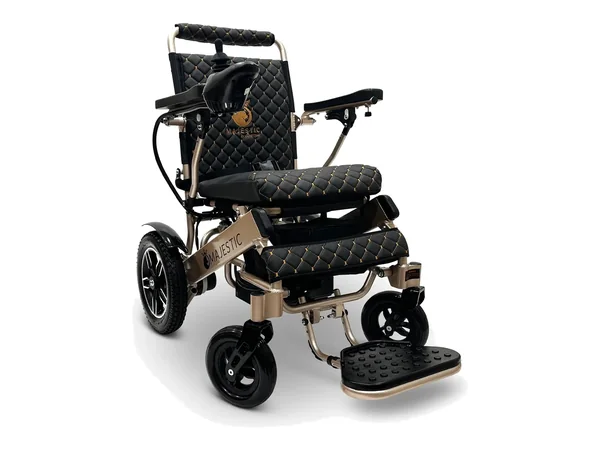
| ComfyGo Majestic IQ-8000 | 288 Wh (12 Ah pack) | 52.9 lb |
Watch the options. The 20 Ah battery of the IQ-8000 holds 480 Wh, and ComfyGo itself says it "may not be approved". Pride calls only the 10 Ah battery of the Ultra Light airline compliant. If a seller can't give you the watt-hours in writing, the airline agent won't guess them for you.
Read the exact words, because they differ. Pride writes "airline compliant lithium battery" and then: "Transport of this item on commercial aircraft is subject to federal regulations and airline policy. Please consult your airline prior to your flight." Journey writes "FAA-Compliant for Air Travel" and adds that airline policies vary. WHILL writes that the battery of the Model C2 "is approved for airline travel". Fold & Go calls the MagSHOCK "FAA Fly-Ready".
None of these is a certificate you can show at the counter. The FAA page we read lists conditions for batteries; it does not list approved chairs. What helps at the airport is paper: the battery's watt-hours printed on its label, and the page of the manual that shows how it comes out.
At the checkpoint, TSA screens the chair, cushions included. You can ask to be screened while seated in your chair. A power chair then usually travels in the hold, and the Department of Transportation says airlines "must also provide for the checking and timely return of assistive devices at the gate for use in the terminal" (Airline Passengers with Disabilities Bill of Rights). So you ride your own chair to the aircraft door and get it back there.
The FAA is plain about one disappointment: "airlines may not be able to accommodate the folded-up wheelchair" in the cabin, in which case the chair, "with batteries removed, may travel as checked baggage". The battery goes with you. Bring a pouch for it and tape or caps for the terminals.
Video: "Airline Passengers with Disabilities Bill of Rights", US Department of Transportation on YouTube. Not made by us; chosen because it shows the chair or the topic clearly.
Notice and numbers. Delta asks you to "inform us 48 hours before you fly", to measure "the height and width of your chair at its smallest size", and to print its Mobility Device Handling Form before the trip; it recommends 48 hours of notice for battery-operated devices (delta.com). American Airlines offers pre-boarding and airport assistance, and carries a special notice: "For travel on or after March 31, 2027, new battery requirements apply to wheelchairs, scooters and other mobility devices powered by lithium-ion batteries" (aa.com). If you fly American after that date, read the notice again before booking.
We could only read these two airline pages on November 13, 2026. For any other airline, look for "mobility devices" in its accessibility pages and write down what the agent tells you, with a name and a date.
The Bill of Rights published by the Department of Transportation says it without hedging: "Should an airline lose, damage, or destroy the wheelchair or other assistive device, the airline must provide compensation in an amount up to the original purchase price of the wheelchair or device." Keep your order confirmation: it is the proof of that price. Take photos of the chair at the gate, from four sides, before you hand it over.
The department also says airlines must give "prompt wheelchair or other guided assistance to board, deplane, or connect to another flight" (transportation.gov). Ask for it when you book, not at the gate.
If you have not bought the chair yet, the lightweight electric wheelchair ranking is the place to start: light chairs are also the ones with small batteries.
| Chair | |||||
|---|---|---|---|---|---|
| Battery | Lithium, 240 Wh | Lithium, 288 Wh | Lithium, 252 Wh | Lithium, 209 Wh | Lithium, 288 Wh |
| Weight to lift | 26 lb (battery out) | 39 lb (battery out) | 33 lb (battery out) | 35.7 lb (battery out) | 52.9 lb (battery out) |
| Weight with battery | 29 lb | 43.6 lb | 38 lb | 39.7 lb | 58.9 lb |
| Folded size | 26.8 × 28.3 × 11.4 in | 28.3 × 12.2 × 24 in | Size not published | 38.8 × 24.3 × 11.3 in | 23.5 × 15 × 30 in |
| Weight capacity | 240 lb | 300 lb | 300 lb | 300 lb | 330 lb |
| Where to buy | Check price at SteadyHome | Check price at Electric Wheelchairs USA | Check price at Electric Wheelchairs USA | Check price at Electric Wheelchairs USA | Check price at Electric Wheelchairs USA |
✓ marks the best figure of the row. Prices checked November 13, 2026 at the seller named in each review.
This guide helps you buy; it is not medical, legal or insurance advice. A doctor or an occupational therapist knows which chair suits a health condition, and only Medicare, your plan or your airline can confirm what they will accept.
Three chairs named in this guide, with their score and dated price. See the full ranking
$2,645checked Nov 13, 2026
Best for: the lightest chair to lift: 26 lb.
$2,598checked Nov 13, 2026
Best for: travel on a carbon frame without the Carbon 27 price.
$2,695checked Nov 13, 2026
Best for: a 19 in seat that pulls up under a table.
From $1,699 to $3,999: what each type costs, why one chair has three prices and what a return really costs.
Read the guide ›Lithium or sealed, watt-hours explained, charging times from 4 to 14 hours and the questions to ask about a replacement.
Read the guide ›What medicare.gov says, word for word: who is eligible, the 20% you pay, prior authorization, and which chairs carry a billing code.
Read the guide ›